
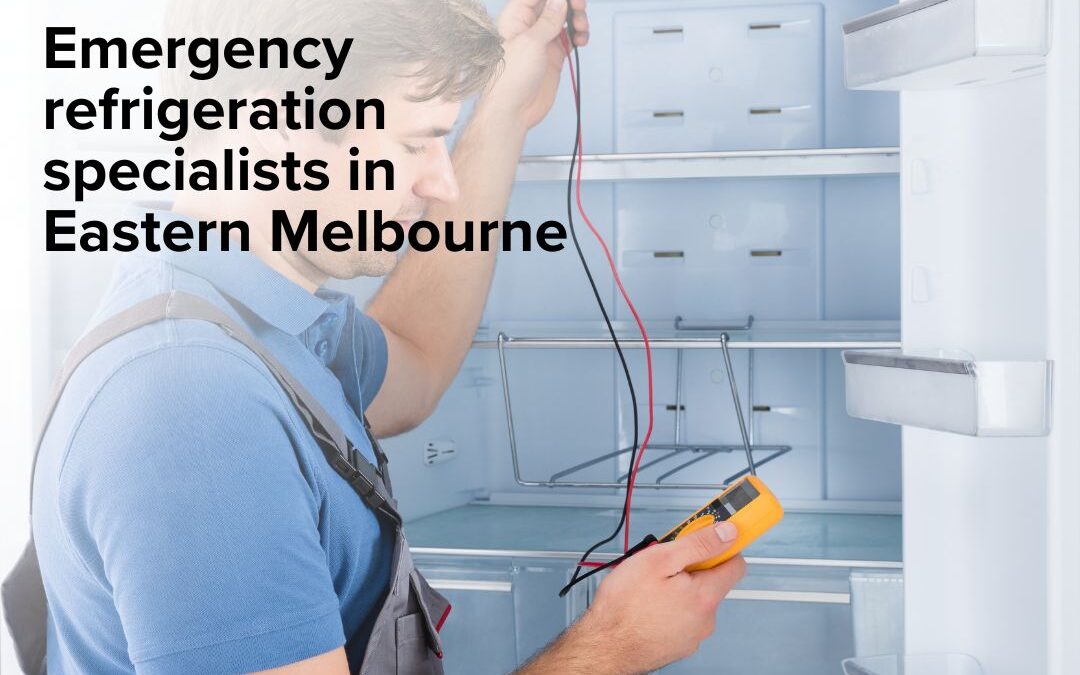
When your cool room drops temperature, the freezer alarms start screaming, or your display fridge stops holding safely cold air, it’s never “convenient”. For cafés, restaurants, supermarkets, butchers, bakeries, florists, medical clinics, and warehouses across Eastern Melbourne, refrigeration downtime can mean spoiled stock, interrupted trade, and serious food-safety risk.
That’s where Coop Group comes in.
We provide emergency refrigeration services across Eastern Melbourne, responding fast to urgent breakdowns and restoring temperature control with safe, compliant repairs. Whether it’s a failing compressor, iced-up evaporator, gas leak, faulty controller, blocked drain, or a condenser that’s packed with debris, our technicians focus on what matters most in an emergency: get you stable, get you cold, and get you back to business.
Below is a practical guide to what emergency refrigeration really involves, the most common faults we see in the Eastern suburbs, and how Coop Group helps reduce risk and prevent repeat breakdowns.

Why emergency refrigeration response matters
Refrigeration isn’t like many other trade issues where you can “book it in next week”. When cooling fails, the clock starts immediately.
In many businesses, a breakdown can cause:
- Rapid stock loss (especially meats, dairy, seafood, pre-prepared foods, and temperature-sensitive products)
- Food safety compliance risk (temperature control is a critical part of safe storage)
- Lost revenue from closing sections of your store, slowing service, or shutting down entirely
- Damage to equipment if faults escalate (compressors running hot, fans burning out, coils freezing solid)
- Customer confidence issues if your displays aren’t presenting properly
Emergency refrigeration is about minimising downtime and protecting stock, but it’s also about diagnosing the cause properly—because temporary “band-aid” fixes often lead to repeat failures at the worst possible time.

Our emergency refrigeration services in Eastern Melbourne
Coop Group provides urgent assistance for a wide range of commercial refrigeration systems, including:
Cool rooms & freezer rooms
- Temperature not pulling down
- Ice build-up on evaporators
- Faulty door seals causing warm air ingress
- Fans not running or noisy bearings
- Refrigerant leaks and low-gas symptoms
- Defrost cycle failures and controller issues
Display fridges, deli cases & grab-and-go cabinets
- Warm product temps
- Condenser blocked or overheating
- Broken door hinges, seals, or closures
- Controller/thermostat faults
- Fan failures causing uneven temps
Underbench fridges & freezers
- Short cycling
- Refrigerant leaks
- Blocked airflow and poor ventilation
- Compressors overheating from dust build-up
Ice machines
- Not producing ice
- Poor water quality issues
- Scale build-up
- Drainage and pump faults
- Temperature and harvest cycle problems
Refrigerated prep stations
- Not holding safe temp during service
- Coil freezing
- Airflow blockages due to overloading
- Controller issues
Medical & temperature-sensitive storage
- Vaccine/medicine fridges and controlled storage
- Alarm and temperature stability concerns
- Prompt repair and system checks to protect sensitive stock
If you’re unsure what system you have, don’t stress—describe what’s happening, and we’ll guide you through the next steps.
Common causes of refrigeration breakdowns
Emergency refrigeration faults often come down to a few common issues. Understanding them helps explain why fast response is important—and why preventative maintenance is often cheaper than reactive repairs.
1) Dirty condensers and blocked airflow
This is one of the most common causes we see. When a condenser is clogged with dust, grease, or debris, the system can’t reject heat properly. The compressor runs hotter and longer, pressures climb, and cooling performance drops. In busy shops with kitchen grease in the air, this can happen quickly.
Symptoms include:
- Fridge/freezer running constantly
- Poor temperature performance in warm weather
- Compressors overheating and tripping out
- Higher energy bills
2) Refrigerant leaks (low gas)
If there’s a leak, the system can’t move enough heat. It might still run, but it won’t pull down or will struggle under load. Leaks can be slow and subtle, or they can be sudden if a pipe rubs through or a fitting fails.
Signs to watch for:
- Temperature gradually rising over days/weeks
- Ice forming in unusual places
- Hissing sounds, oil stains near joints
- System runs but doesn’t cool properly
3) Evaporator icing and defrost failures
Ice build-up on the evaporator coil restricts airflow, so even if the refrigeration circuit is working, cold air can’t circulate. Defrost timers, heaters, sensors, and controllers all play a role here.
Typical symptoms:
- Fans running but warm air output
- Visible ice behind panels
- Water leaks from melted ice
- Frequent alarms or temperature swings
4) Fan motor failures
Condenser fans and evaporator fans are critical. When a fan stops, airflow stops—leading to overheating, icing, or uneven temperatures.
Common signs:
- Unusual noises, grinding, squealing
- Hot condenser area
- Frost patterns and uneven cabinet temps
5) Thermostat/controller faults
Modern systems rely on sensors and electronic controllers. When these fail, the unit may short-cycle, run continuously, or not run at all.
Symptoms might include:
- Incorrect temperature readings
- Unit not responding to setpoints
- Alarm codes on the display
- Random shutdowns
6) Door seals, hinges, and usage issues
Warm air infiltration is a big deal—especially in summer. Worn seals, doors left ajar, or high-frequency access during service can overwhelm the system. Sometimes the “fault” is actually a combination of access patterns and aging components.
What to do immediately when your refrigeration fails
If you’re dealing with an urgent breakdown, here are smart, practical steps that can reduce damage before we arrive:
- Check if it’s a power issue
Look for tripped breakers, power switches, or unplugged leads. (Don’t reset breakers repeatedly if they keep tripping—this can indicate a bigger electrical fault.)
- Keep doors closed
Every time a door opens, warm air rushes in. If you can, stop access and keep doors shut.
- Move high-risk stock
If you have another working unit, move your most temperature-sensitive items first. Use eskies and ice temporarily if needed.
- Don’t overload the unit
If it’s struggling, overloading can slow recovery and make the system work harder.
- Take note of what’s happening
Any alarms, error codes, unusual noises, ice build-up, or recent temperature changes are useful clues.
Then call Coop Group and let us know:
- The type of unit (cool room, freezer, display fridge, etc.)
- Your location in Eastern Melbourne
- What the temperature is doing
- Any alarms or codes on the controller
- Whether the issue is sudden or gradual
How Coop Group approaches emergency refrigeration repairs
In an emergency, speed matters—but so does accuracy. Our process is designed to stabilise your system quickly while also identifying the underlying cause.
Step 1: Rapid assessment and safety checks
We confirm basic electrical safety and isolate risks. Many refrigeration faults are tied to electrical components, so we ensure safe access before any repair begins.
Step 2: Diagnose, don’t guess
We test pressures, temperatures, airflow, controls, fans, and defrost function. This helps us avoid “quick fixes” that don’t solve the real issue.
Step 3: Stabilise temperature first
In many urgent call-outs, the priority is getting cooling back and reducing stock risk. Once the system is stabilised, we explain what caused the failure and what we recommend next.
Step 4: Repair and verify performance
We don’t just “get it running”—we aim to confirm:
- The unit is pulling down correctly
- Airflow is strong and consistent
- Defrost is operating properly (where applicable)
- Controls and sensors are reading accurately
- No obvious leak indicators are present
Step 5: Prevent repeat failures
If we find contributing factors—dirty condenser coils, failing fan motors, damaged seals, drainage issues—we’ll talk you through preventative steps to reduce another emergency call-out.
Emergency refrigeration for businesses across Eastern Melbourne
Eastern Melbourne has a huge range of commercial sites and refrigeration demands—from high-traffic strip shops and cafés to larger supermarkets, medical centres, and industrial facilities.
Coop Group supports emergency refrigeration needs for:
- Hospitality: cafés, restaurants, pubs, bars, function venues
- Retail food: supermarkets, delis, butchers, fishmongers, bakeries
- Health & medical: clinics, pharmacies, labs, temperature-controlled storage
- Industrial & storage: warehouses, distribution centres, production facilities
- Specialty retail: florists, convenience stores, bottle shops (where applicable to refrigeration equipment)
If your business relies on cold storage or refrigerated display, you need a team who understands the urgency and the standards required.
Preventative maintenance: the best way to avoid emergencies
Most refrigeration emergencies have warning signs—reduced cooling performance, longer run times, odd noises, ice build-up, minor leaks, inconsistent temperatures. Preventative maintenance helps catch those issues early.
Benefits of routine refrigeration servicing include:
- Reduced breakdown risk during peak trade
- Improved temperature stability and performance
- Lower energy costs (clean coils = less strain)
- Longer equipment lifespan
- Better compliance confidence for food safety standards
Even a simple schedule—especially for high-use environments—can make a big difference.
If you’re running multiple units (cool room + freezer + display + underbench), a preventative plan is often the most cost-effective way to protect stock and reduce call-outs.
Why Eastern Melbourne businesses choose Coop Group
When refrigeration fails, you don’t just need “a technician”. You need a team that understands that every minute matters.
Coop Group is trusted because we focus on:
- Fast response for urgent issues
- Clear communication—what the issue is, what we’re doing, and what comes next
- Reliable diagnostics to reduce repeat breakdowns
- Practical solutions that protect your stock and your trade
- Professional workmanship and a safety-first approach
We know the pressure business owners and managers face during a refrigeration emergency—and we aim to take that stress off your plate with calm, efficient support.
Book an emergency refrigeration technician in Eastern Melbourne
If your cool room isn’t pulling down, your freezer is warming up, or your refrigeration system has stopped altogether, contact Coop Group for emergency refrigeration repairs in Eastern Melbourne.
We’ll help you stabilise temperature quickly, diagnose the cause, and get your business back to running as smoothly as possible—because when refrigeration goes down, you need action, not excuses.
Need urgent help now?
Reach out to Coop Group and let us know what system is down, what the temperature is doing, and your location—our team will take it from there.